Words / Cody Liska
Over the next three months, the Anchorage Press will be rolling out a series of articles investigating the mechanisms of crime and violence in Anchorage. Through research and interviews with professionals, law enforcement and those affected by crime, we intend to build a better understanding of what made 2016 such a violent year.
How do you scare a community? You disrupt its ability to function properly. You start by threatening something sacred. Its parks, its trails, its schools, its neighborhoods, its vulnerable. You inflict a wound and then you systematically pick at it until that wound becomes a scar and that scar becomes a fearful reminder—an amorphous fear couched in the community’s collective psyche.
“It’s the fear of the unknown,” UAA Professor of Justice Allan Barnes says. “Who is out there killing people and why are they killing them?”
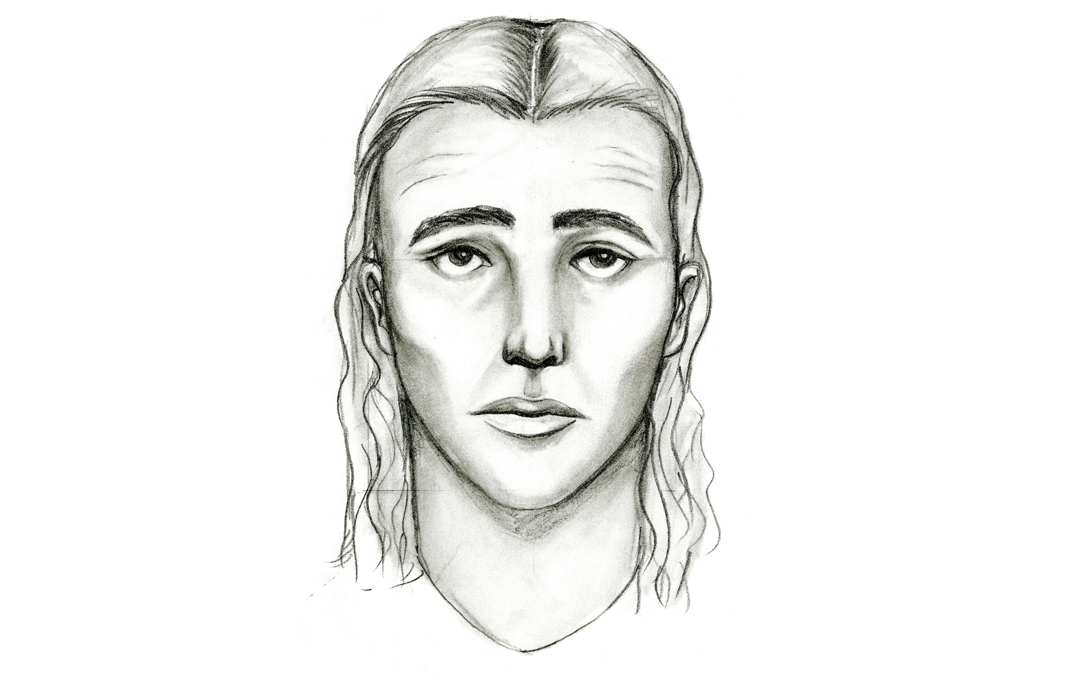
According to our source, four homicide investigations this year are connected to one person—the man in a “person of interest” sketch the Anchorage Police Department released on September 11, 2016 in connection with the killing of Treyveon-Kindell Thompson. Our source says that high-ranking officials at the APD and the FBI have confirmed the murders of Selena Mullenax and Foriegnne Aubert-Morissette at Point Woronzof on January 28, 2016 and Bryant “Brie” DeHusson and Kevin S. Turner at Valley of the Moon Park on August 28, 2016 were committed by the same person. Our source did not identity the fourth investigation. However, the killings of Brianna Foisy and Jason Netter Sr. along the Ship Creek Trail on July 3, 2016 have a similar m.o.
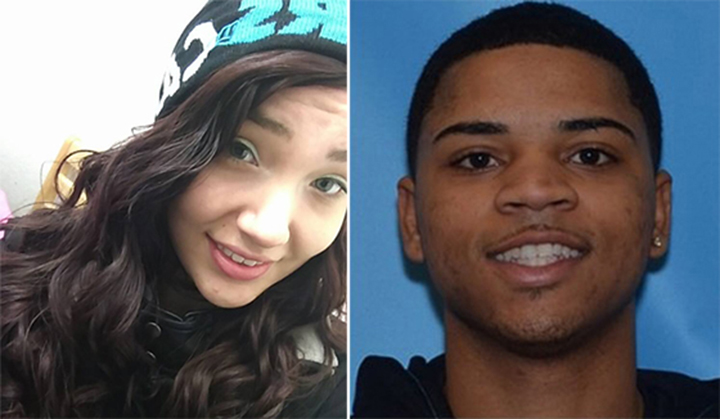
Selena Mullenax (L) Foriegnne Aubert-Morissette (R). Found at Point Woronzof on 1/28/16
Brianna Foisy (L) Jason Netter, Sr. (R). Found along Ship Creek Trail on 7/3/16
Treyveon-Kindell Thompson. Found on Bolin Street in Muldoon on 7/29/16
Bryant “Brie” DeHusson (L) Kevin S. Turner (R). Found at Valley of the Moon Park on 8/28/16
Thompson’s mother, Mandy Premo, has been advised by law enforcement not to speak about her son’s case.
It’s speculated that APD released a “person of interest” sketch instead of a computer-generated profile because the skin color of the person is unknown. “With the sketch, it probably rules out that he’s African-American,” our source says. “But [law enforcement] doesn’t know. And until they can find a pattern, they probably won’t find out. I can imagine that this guy’s probably not going to be caught anytime soon because they’re not even sure if that sketch is accurate.” Castro says that the sketch is specifically for a “person of interest” in the killing of Treyveon-Kindell Thompson.
Retired homicide detective Glen Klinkhart says that APD doesn’t have a full-time crime scene team like police departments in LA or New York. “Ours is made up of officers, detectives, supervisors even, who stop what they’re doing and go to the crime scene and do the crime scene work,” he says. “Which means you’ve pulled four, five, six people [from] other jobs. For our size of department, it has worked really well over the years. Except when you have multiple [deaths] … In fact, we often bring in help like the FBI and the ATF not because of a serial killer, but because [APD officers] are tired.”
It’s easy to forget about the victims in all the bureaucratic back and forth. And getting their story right takes time. That’s because it’s impossible to accurately sum up the identity of a loved one—to condense an entire person, with all of their dreams, missteps and eccentricities—into a single quote or sound bite. So, when a friend or family member is asked to describe someone they knew, the answer is usually a series of anecdotes. Such is the case with Brianna Foisy and Selena Mullenax.
Selena was 19-years-old when she was killed. She was found at Point Woronzof on January 28. When asked to describe her daughter, Rose Mullenax remembers a “bubbly little girl” who would—as a child—get into name calling contests with her favorite uncle. “I think she was calling him ‘chicken’ and he was calling her ‘varmint’ and they were carrying on back and forth,” Rose remembers. “Finally she gave up and said, ‘no, you’re ‘chicken varmint.’ I cracked up for days over that one.”
Years passed and Selena grew into a young woman with a good heart. To hear Rose tell it, her daughter always kept an eye out for those in need. Like the time she saw “a friend of the family walking the street, looking pretty cold, and she pulled over and picked him up and took him for some hot chocolate and gave him a few bucks,” Rose says. “That’s just the kind of person she was. She would help you if she could.” Then there was the time when Selena saw Rose walking into Fred Meyer on Mother’s Day and pulled over and gave her mom flowers. “And then she gave me a hug goodbye. It was an extra long hug. That’s my fondest moment, my last hug on Mother’s Day. I’ll always remember that.”
Brianna was 20-years-old when she was killed. She was found on the Ship Creek bike path along with 41-year-old Jason Netter, Sr. on July 3. Brianna’s family knows of no connection between her and Netter. Following her death, two depictions of her were described in the news. “One article seemed to be, ‘street kid was killed. What a shame.’ The other [article] was, ‘this girl of a family, with a lot of talent and a lot of cool stories, was killed,” Ryan Foisy says of his adopted sister. “Those stories felt kind of in opposition to one another. Like they were intentionally trying to paint two different pictures. When the truth is both of those—to an extent— are accurate. She was living on the street and that was part of her identity, but she was also this person who came from a family who had all these memories of her, of this person who had all of these great, positive qualities. I didn’t feel like those stories were in opposition, but that they complemented each other to make a full human being.”
On August 30, APD sent out a Nixle text alert warning people that “criminal activity often increases late at night and during early morning hours. APD wants to remind our citizens to be cautious when they are out during these hours, especially if they are in isolated areas like our parks, bike trails or unoccupied streets. If you plan to be out late at night, make sure you travel with several friends and not alone.”
“If indeed [the alert] was meant as a public service reminder, then [APD] really needs to be careful of their delivery method,” Klinkhart says. “I think it caused more concerns and more issues than it helped … Because there was no context … And people tend to fill in the blank when you don’t give them enough context. It’s human nature.”
Another text—this one from a civilian—began circulating throughout the community: “I just got a call from a friend who’s client works for the FBI and they say without a doubt there’s a serial killer in Anchorage on the trail system,” the text reads. “Apparently the tactic is this: the first person is sniped from the woods, the second person is chased down. There are no rules to this nightmare so the person could change who the targeted victims are, time of day, etc and become more brazen. Who knows. Please, don’t let your friends or kids be on the trails and keep a close eye out for anything/anyone suspicious!!”
On September 9, the murders of Selena Mullenax and Foriegnne Aubert-Morissette, Brianna Foisy and Jason Netter, Sr. and Bryant “Brie” DeHusson and Kevin S. Turner made national news when Huffington Post ran a story titled “Anchorage On Edge After Three Double Homicides.” The following day NBC News ran a story titled “Rash of Homicides on Anchorage Trails Unnerves Residents.” Sensationalism was now coming from all ends of the spectrum. And suspicion of a serial killer in Anchorage was now part of a national conversation.
For those of us who have watched Anchorage grow into the city it is today, we ask ourselves, “What the hell is happening to Anchorage?” When, in reality, we know exactly what’s happening to it. It’s becoming a city just like every other American city, a place with a growing population, limited resources and nearsighted humans.
“Perception is reality,” Barnes says. “Even if the only bad things that have ever happened [at Valley of the Moon Park] have been at two in the morning, you would still be fearful of going there at two in the afternoon on a sunny Sunday because perceptions become reality. Valley of the Moon is now gaining that sense of being a bad place, an unsafe place. What about the people who live next to it? Now they live next to an unsafe place, which now means they live in an unsafe neighborhood … We could catch every murderer there ever was and the community would feel safer than if there were less murders, but we never caught anyone.”
There were 29 homicide cases in Anchorage in 1995 and every time the city creeps closer to that infamous number, we become edgier and more concerned. However, if we look at other American cities, with comparative populations, we can see that Anchorage homicides are still on the low end. Pittsburgh has 46 homicides so far this year and Cincinnati has 50. What we forget is that there are 50,000 more people in Anchorage today than in 1995. Meaning, when annualized for 2016, a homicide count of 39 would be a more accurate number to fear. But fear isn’t the answer. Hope and unity are. Because even in tragedy there is something to be learned.
“I think the idea of a serial killer isn’t out of the question, but we should be careful in trying [not] to dramatize the situation more than it is,” Ryan Foisy says. “We should all proceed by allowing law enforcement to deal with this, but also to accept that there are many possible answers. Because if we’re wrong and this is something else—say gang violence or regular street violence—we as a community could let our speculations get ahead of ourselves and that can sometimes mean hindering a solution to the problem.”
Additional reporting by Ammon Swenson
 EP 141
 EP 140
 EP 139