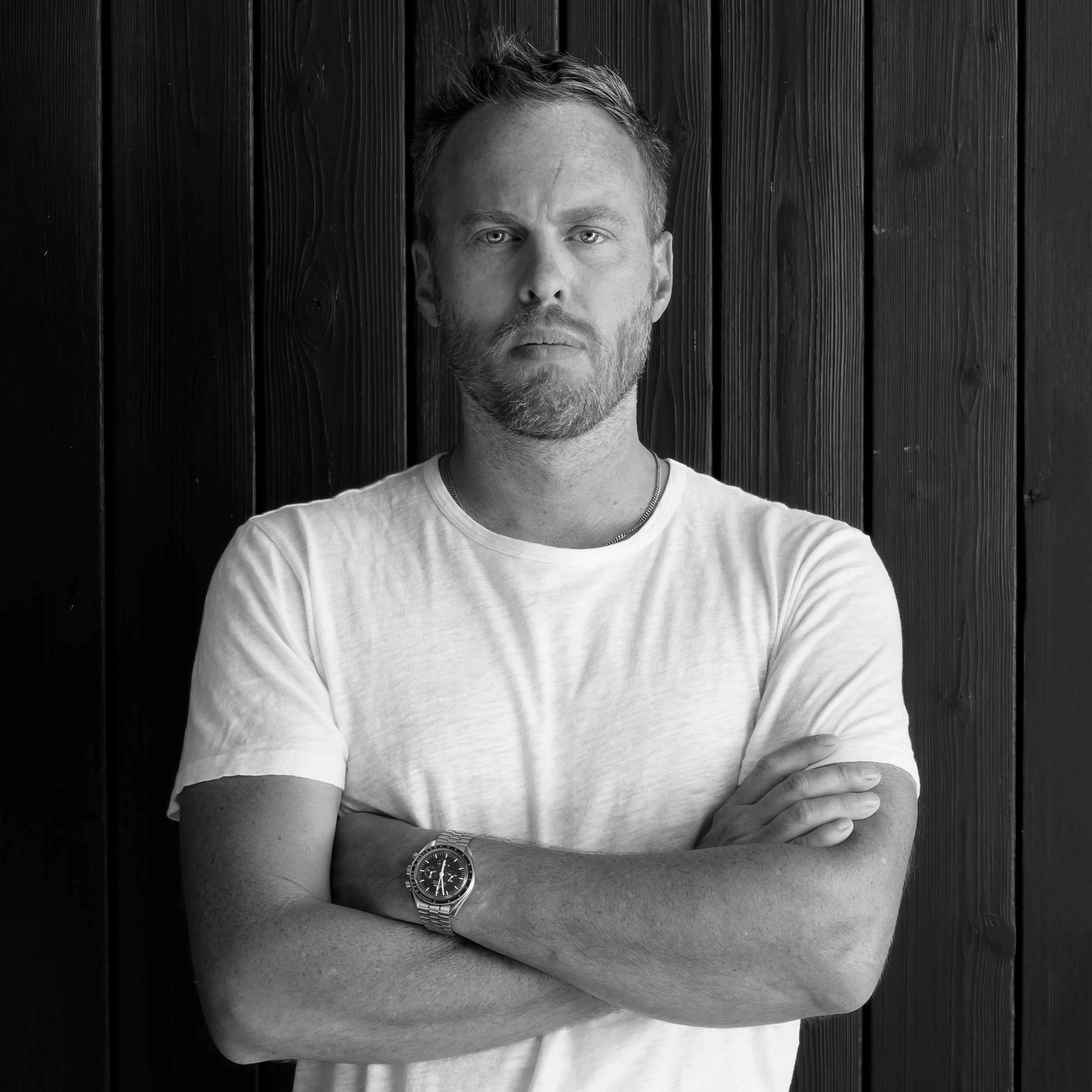
Charles Stankievech is an artist, a writer, and an academic. He teaches at the University of Toronto, and his art takes him into some of the most remote landscapes on earth. Places like CFS Alert, the northernmost permanently inhabited place in the world. He describes the Arctic as occupying two parallel spaces in our cultural imagination: one built on myth and fantasy, and another grounded in harsh, physical reality. He says that most people will never set foot there, which means our understanding of it comes from ideas rooted in medieval tales of magnetic mountains, science-fiction fortresses carved out of ice, or the general sense that it’s a blank, unreachable expanse. But beneath that fantasy is a real landscape shaped by nature and human activity.
One of Charles’ early Arctic projects was about the Distant Early Warning Line, a network of Cold War radar stations built across the Arctic to detect incoming Soviet bombers. He began thinking about how the remnants of that global conflict were already entangled with what he called an emerging “Warm War,” where rising temperatures and melting sea ice would turn buffer zones into contested shipping routes and resource frontiers.
Sound is one of his primary tools for understanding these places. He says that what you hear often tells a different story than what you see, and so his work uses sound to help people experience aspects of a place that visuals alone can’t capture. That instinct connects back to his own life — long days spent alone in the Rockies with his dog, camping, hiking, and snowboarding in the backcountry. Those solitary experiences were a refuge, a place where existential questions emerged naturally. It’s where he learned that when you confront the world on your own terms, you gain a clearer understanding of yourself and the people around you.

 EP 034