 EP 067
Chatter Marks Ep 67 Culture comes from our environment with Cordelia Qiġñaaq Kellie
Cordelia Qiġñaaq Kellie specializes in cross-cultural communications. It’s a position that gives her the space and the opportunity to learn about how ...
Adjust the website's display to match your visual and cognitive needs. Your preferences are saved automatically on this device.
Enhance color intensity to improve readability.
Increase the global font size by 10%.
Override custom typography with a standard system font.
Add prominent underlines to all clickable hyperlinks.
Disable movement, scrolling effects, and transitions.
Apply OpenDyslexic weighted typeface for easier reading.
Jonathon Keats is an artist, writer, and experimental philosopher, and his work uses imagination to question some of our most basic assumptions about ...
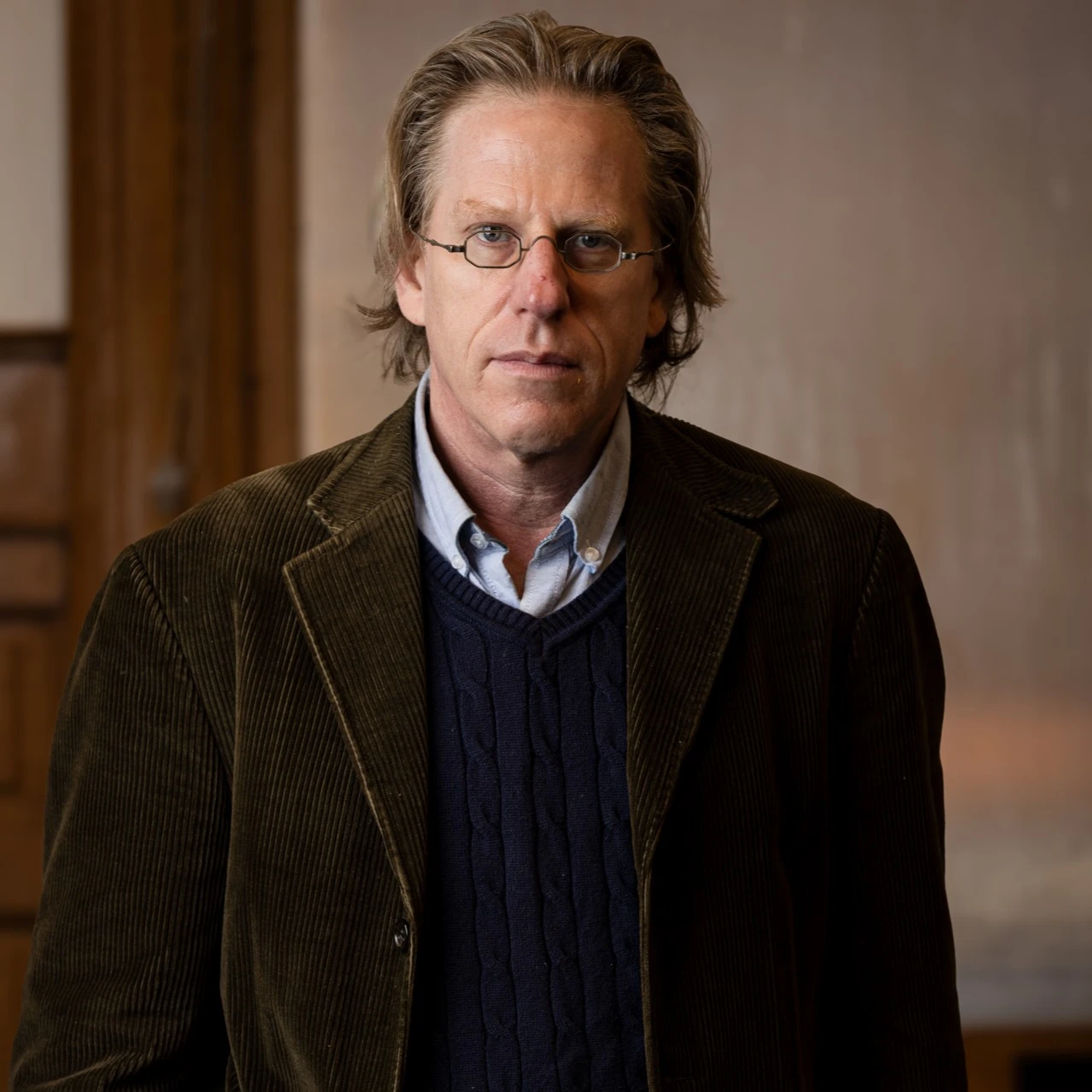


Jonathon Keats is an artist, writer, and experimental philosopher, and his work uses imagination to question some of our most basic assumptions about how the world works. His new book, “_A Field Guide to More-Than-Human Governance_,” looks beyond human societies for new ways of thinking about politics, drawing lessons from bacteria, fungi, plants, animals, and entire ecosystems. At the heart of the book is a simple idea: humans didn’t invent governance. Living things have been organizing, cooperating, competing, and adapting to one another for billions of years, and Jonathon argues that we might have something to learn from them. He asks us to reconsider what intelligence looks like, who—or what—we're willing to learn from, and ultimately, what our place is within the natural world.
In “_A Field Guide to More-Than-Human Governance_,” Jonathon takes that idea and asks what it might actually mean for the way we govern ourselves. Bacteria become models for collective decision-making, lichens offer lessons about cooperation and conflict, and other species challenge our assumptions about hierarchy, resilience, and even democracy. Jonathon calls this approach “political biomimicry”—looking to the strategies that have evolved throughout nature and considering how they might inspire new approaches to human politics. It's an imaginative way of thinking about some very real problems, and one that asks us to reconsider whether humans should always be the only ones setting the terms.
Photo courtesy of The Berggruen Institute
EP 067Cordelia Qiġñaaq Kellie specializes in cross-cultural communications. It’s a position that gives her the space and the opportunity to learn about how ...
 EP 039
Photographer Young Kim says that it’s weird to live in a place that’s so big and so busy that people aren’t checking up on each other. He prefers smal...
 EP 007
In this episode, we have a conversation with Dr. Alex James, an economics professor at the University of Alaska Anchorage, with a research focus on re...