 EP 136
Chatter Marks EP 136 Anchorage history in fragments with David Reamer
Anchorage Historian David Reamer has spent years digging through archives, newspapers, and forgotten corners, recovering stories that might otherwise ...
Adjust the website's display to match your visual and cognitive needs. Your preferences are saved automatically on this device.
Enhance color intensity to improve readability.
Increase the global font size by 10%.
Override custom typography with a standard system font.
Add prominent underlines to all clickable hyperlinks.
Disable movement, scrolling effects, and transitions.
Apply OpenDyslexic weighted typeface for easier reading.
Jeremie McGowan is an artist, designer, and researcher. Amund Sjolie Sveen is an artist. And together, they created _Real. Arctic.,_ an exhibition tha...


Jeremie McGowan is an artist, designer, and researcher. Amund Sjolie Sveen is an artist. And together, they created _Real. Arctic.,_ an exhibition that examines how the word “Arctic” is used in branding, institutions, geopolitics, and everyday consumer products — and how the use of that word shapes what we think we know _about_ the arctic. Their work blurs the line between critique and commodity, asking who gets to define the Arctic, who profits from it, and what gets flattened in the process. Throughout the exhibition, the work shifts form — from displays of “Pure Arctic” deodorant to an expanding archive of Arctic-branded objects — asking viewers to reconsider what is real and what has been manufactured. It explores how art and design can both construct and unravel powerful narratives about place, and what responsibility comes with working inside those systems.
Jeremie and Amund collect and document products from around the world that call themselves “Arctic,” or borrow the image, the light, or the myth of the Arctic to sell something. Even when those products have no connection to the place itself. Deodorants that promise Arctic purity, chewing gum that offers polar freshness, outdoor brands that are marketed around rugged endurance and masculine extremes. Again and again, the Arctic appears as clean, untouched, and invigorating — a blank canvas for refreshment or conquest. As Jeremie points out, much of that marketing is driven by an outsider fantasy: the idea that you’re the first, the only one to witness the wilderness or the Northern Lights, even as that experience is packaged and sold en masse. Amund says that the Arctic’s power as a word may lie in its perceived remoteness. Because it feels unknown, it can be filled with whatever we want it to mean. And in that process, the realities of the place itself and the people who live there often fall away and what remains is a brand. And then, beneath all of that, is a deeper question about power: who gets to define a place, and whose version of that place becomes the story that guides our understanding of it.
EP 136Anchorage Historian David Reamer has spent years digging through archives, newspapers, and forgotten corners, recovering stories that might otherwise ...
 EP 065
Aaron Leggett is the president of the Native Village of Eklutna and the Senior Curator of Alaska History and Indigenous Culture at the Anchorage Museu...
 EP 114
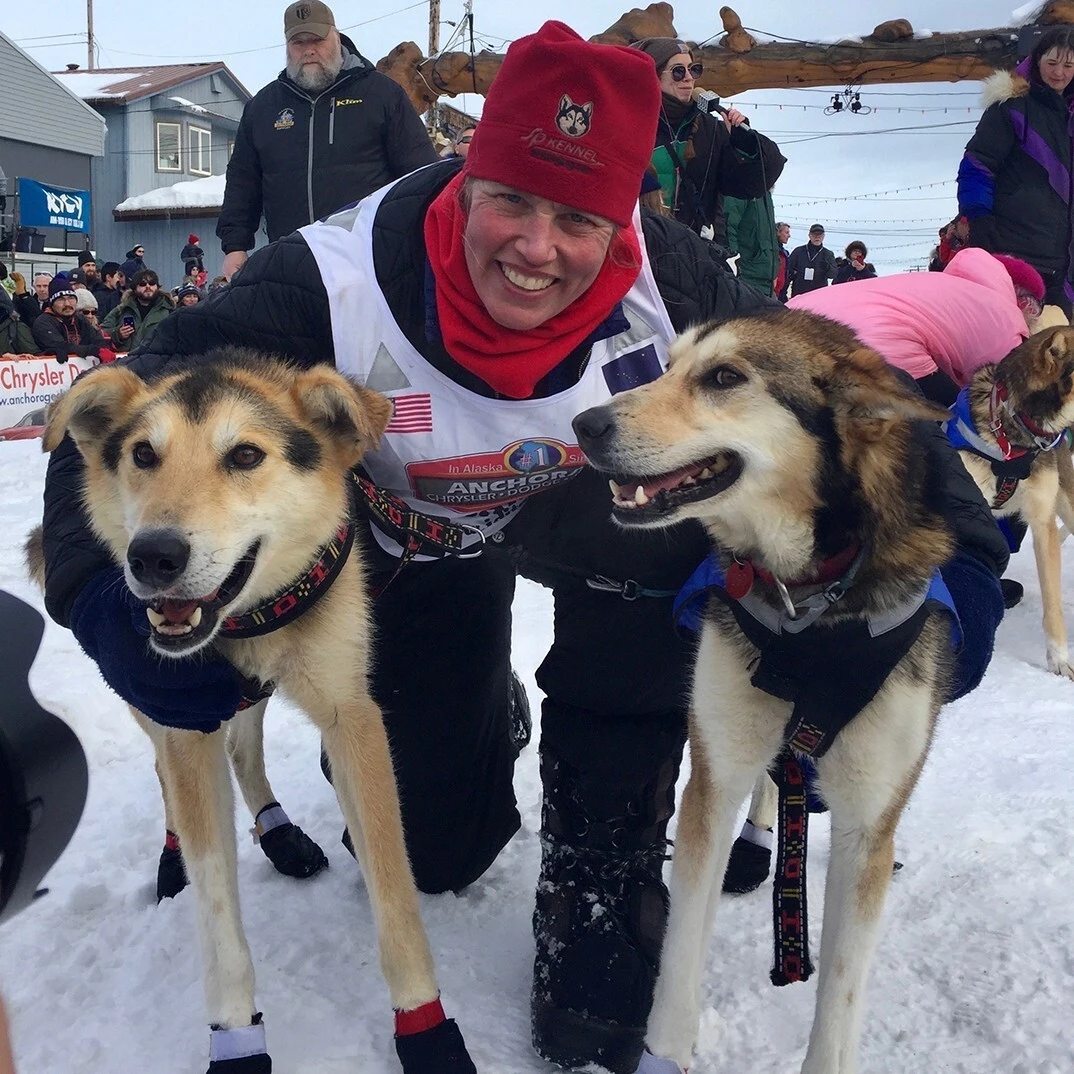
In this one, Cody talks to dog musher Aliy Zirkle. She’s always felt a strong connection to animals, dogs in particular. She tells this story about ho...