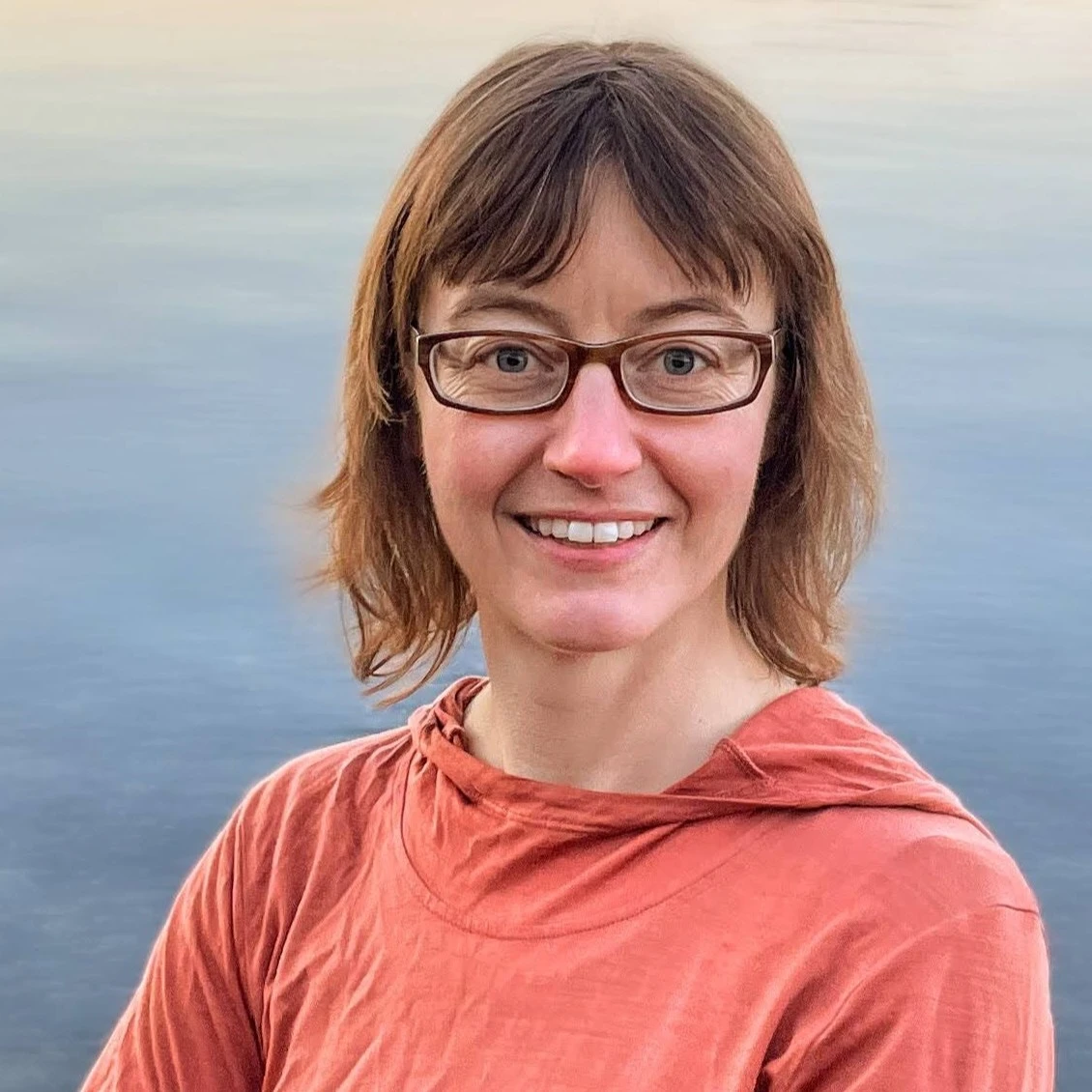
Corinna Cook is an essayist whose writing follows the stories embedded in the borderlands of Southeast Alaska, northern British Columbia, and the southern Yukon. Drawing from history, natural science, and personal experience, she asks what the landscape can teach us—how it preserves memory, how climate reshapes our understanding of place, and how the painful histories of colonialism continue to shape life in the present. Her essays remind us that history and the natural world are inseparable, that the past lingers in rivers, forests, permafrost, and the traces left behind by those who came before us. And rather than searching for tidy conclusions, she approaches each essay as an open question, using it to better understand the North, the stories preserved in its landscapes, and what it means to live within the long arc of geologic time.
Her recent book, _Permafrost Is an Archive_, is a collection of essays about turning toward the land. Moving through the boreal forest, thawing permafrost, and the invisible lines that divide nations, she asks what the land remembers and what it can teach us about the painful histories we carry, the ones that continue to shape how we see each other and the world around us. She doesn't offer easy answers. Instead, her essays become meditations on home and displacement, deep time and human history, and the difficult work of building more honest relationships with each other. As climate change reshapes the North, she argues that our ability to adapt may depend as much on how we confront our shared histories as on how we respond to environmental change. At the heart of the book is a question that echoes throughout her work: Now that we know, what do we do with that knowledge?