 EP 078
interviewsAudio
EP 078 with Mike Ward
In this episode, Cody has a conversation with Mike Ward, the co-owner of The Pioneer Bar. The Pioneer Bar, better known as Pio, is a classic Alaskan b...
Adjust the website's display to match your visual and cognitive needs. Your preferences are saved automatically on this device.
Enhance color intensity to improve readability.
Increase the global font size by 10%.
Override custom typography with a standard system font.
Add prominent underlines to all clickable hyperlinks.
Disable movement, scrolling effects, and transitions.
Apply OpenDyslexic weighted typeface for easier reading.
In this one, Cody talks to Tlingit artist James Johnson. Before he got to the level he’s at now, James taught himself the fundamentals of the Tlingit ...
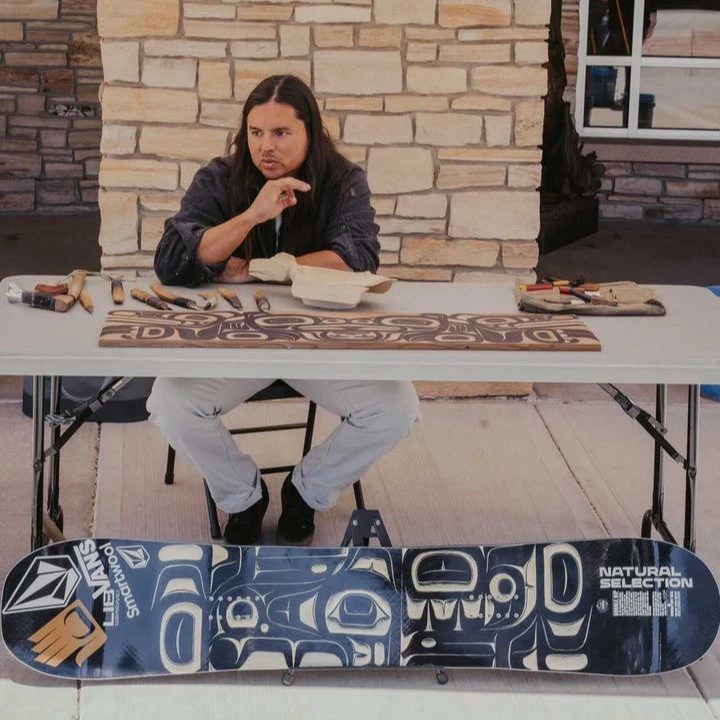
In this one, Cody talks to Tlingit artist James Johnson. Before he got to the level he’s at now, James taught himself the fundamentals of the Tlingit artform — he taught himself how to draw, how to carve, how to sharpen his knives. He taught himself the fundamentals of formline. His dad taught him the importance of traditional knowledge — that when you create a piece, you create it for your clan. Be it a paddle, a bowl, a bentwood box, a mask, a rattle, a totem pole. He says that in the old days, once the carvers were finished with a totem pole — once it was raised — they could no longer touch it because now it belonged to the people. James’ dad told him that when he finishes a piece, to let it go and, like a balloon in the sky, that piece will go where it needs to go. The main thing is to focus on skill and that your skill is going to improve with every piece you do.
Everything that he’s doing right now — whether it’s talking to an auditorium of 500 people or hosting a workshop for youth or working on a commission for Google — it’s bigger than him. It’s for his ancestors, for his culture and his traditions. It’s a reminder of the destruction and human toll of colonialism. It’s more than creating a beautiful piece. It’s about understanding history and sharing Tlingit knowledge. He does it for his clan, for his family and for his contemporaries — all of the other northwest coast artists striving to reach the golden age of their artform that occurred in the 1700s and early 1800s, after steel was introduced to their culture during the fur trade.
EP 078In this episode, Cody has a conversation with Mike Ward, the co-owner of The Pioneer Bar. The Pioneer Bar, better known as Pio, is a classic Alaskan b...
EP 007This week, Crude will be revisiting the top 5 most popular episodes of 2020. Number 2 on this list is with Joe Rambur, where we look at addiction thro...
In Part 2 of Outrun Your Demons, Ryan Earp takes another stab at the road to L.A. This time, he brings his buddy Mike Caldarola along. Back in Ft. Ne...