
2020 Throwback: EP 077 A life in the tattoo industry with Deb Yarian
In this episode, Cody has a conversation with tattoo artist Deb Yarian. Deb started tattooing in New York in 1979. Back when tattoo culture was reserv...
Adjust the website's display to match your visual and cognitive needs. Your preferences are saved automatically on this device.
Enhance color intensity to improve readability.
Increase the global font size by 10%.
Override custom typography with a standard system font.
Add prominent underlines to all clickable hyperlinks.
Disable movement, scrolling effects, and transitions.
Apply OpenDyslexic weighted typeface for easier reading.
In this one, Cody talks to Christopher Michlig. He’s a visual artist and a professor at the University of Oregon, and he recently released a book titl...
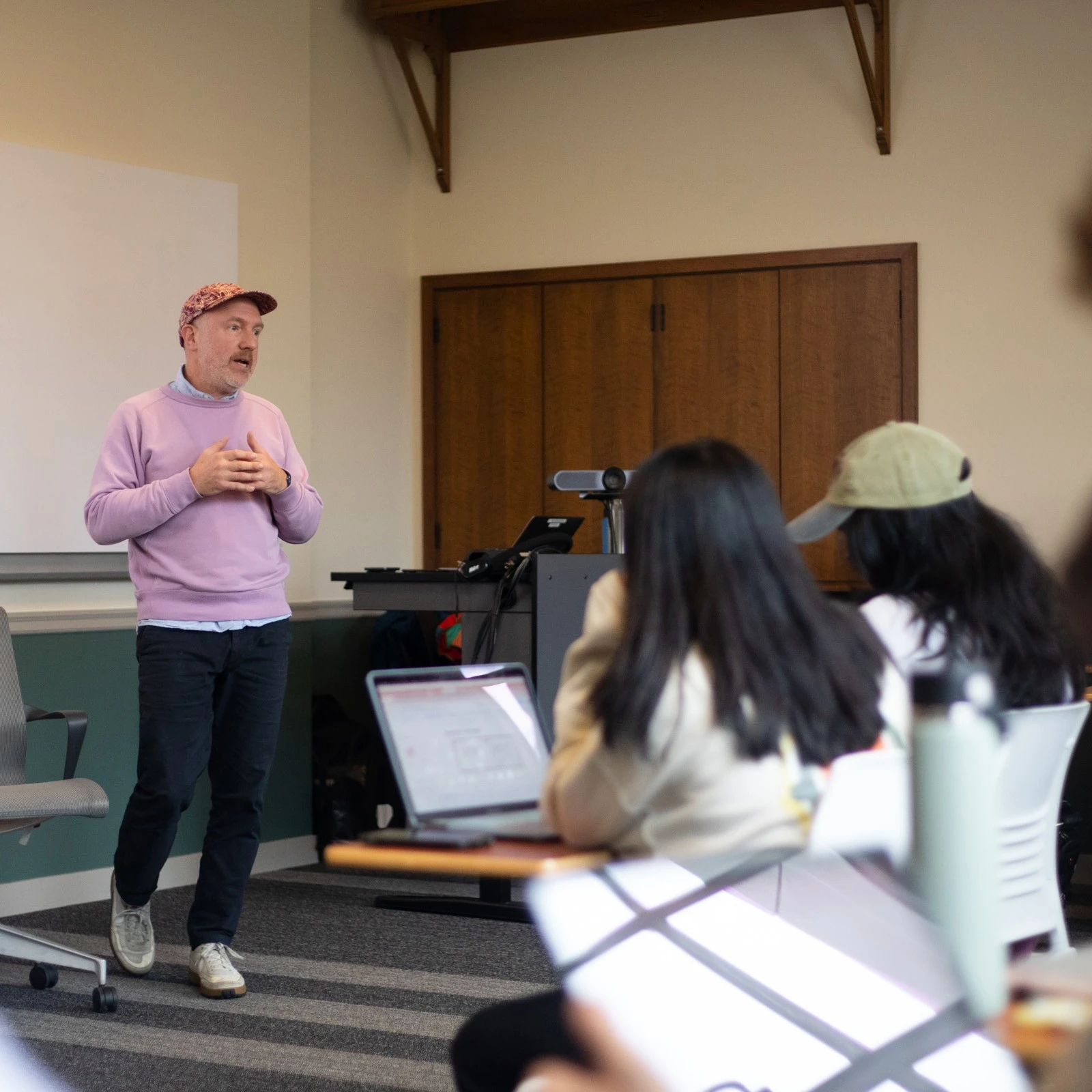

In this one, Cody talks to Christopher Michlig. He’s a visual artist and a professor at the University of Oregon, and he recently released a book titled "File Under: Slime." In it, he traces the origins of the idea of slime back to the early 1900s, with associations to ectoplasm, femininity, and sexuality. In his research, he found that people like HP Lovecraft and John Paul Sartre helped solidify the concept of slime within philosophy and pop culture, paving the way for it to be an analog, or a proxy, for describing the unknown. In the 1950s, for example, there were movies like "The Blob," representing the social anxiety surrounding the atomic bomb. And then in the 1980s — with movies like "The Stuff," "Street Trash," and "The Toxic Avenger" — slime represented a fear of toxicity or the handling of toxic waste. Christopher says that what we choose slime to represent evolves over time. More recently, it has entered rap music through artists like N.O.R.E, from Capone-N-Noreaga, and newer guys like Young Thug. The way these rappers are using the word “slime” is different than how it’s been used in the past. It’s positive, it’s a substitute for friend or homie. Christopher grew up in Girdwood, Alaska, in the ‘80s. He remembers it being a small town back then, maybe about 400 to 500 people. It’s a place that instilled in him the idea of closeness and the importance of a supportive community, sentiments that continue to inspire and influence him. Recently, he’s been doing research on different Aleutian communities, trying to get a better grasp on his family history. He has roots, on his dad’s side, in the Aleutian Islands, before the Russian fur trade. He says it’s been a difficult process, that it’s confusing for him because of the complicated history of Aleutian communities as a result of colonialism and the displacement that occurred during and after World War II. How people who had been living in a place for generations were forced to upend their ancestral ways of living. So, he tries to imagine — even project himself — to the time of his ancestors on the Island of Unga. Without much oral history from his own family to go off of, his research is helping him better understand where he comes from. PHOTO / Ilka Sankari
In this episode, Cody has a conversation with tattoo artist Deb Yarian. Deb started tattooing in New York in 1979. Back when tattoo culture was reserv...
This week, Crude will be revisiting the top 5 most popular episodes of 2020. Number 1 on this list is Long Live Larson, where family and friends share...
In this episode, Cody has a conversation with retired pararescueman Jimmy Settle. Jimmy details his arduous journey to becoming a pararescueman, or PJ...