 EP 079
interviewsAudio
EP 079 with Sharon Liska
In this episode, Cody has a conversation with his mom, Sharon Liska. For the past 13 years, she has worked as a nurse at a neonatal intensive care uni...
Adjust the website's display to match your visual and cognitive needs. Your preferences are saved automatically on this device.
Enhance color intensity to improve readability.
Increase the global font size by 10%.
Override custom typography with a standard system font.
Add prominent underlines to all clickable hyperlinks.
Disable movement, scrolling effects, and transitions.
Apply OpenDyslexic weighted typeface for easier reading.
In this one, Cody talks to author and historian Bathsheba Demuth. She grew up in Iowa, a place she describes as having an extremely cultivated landsca...
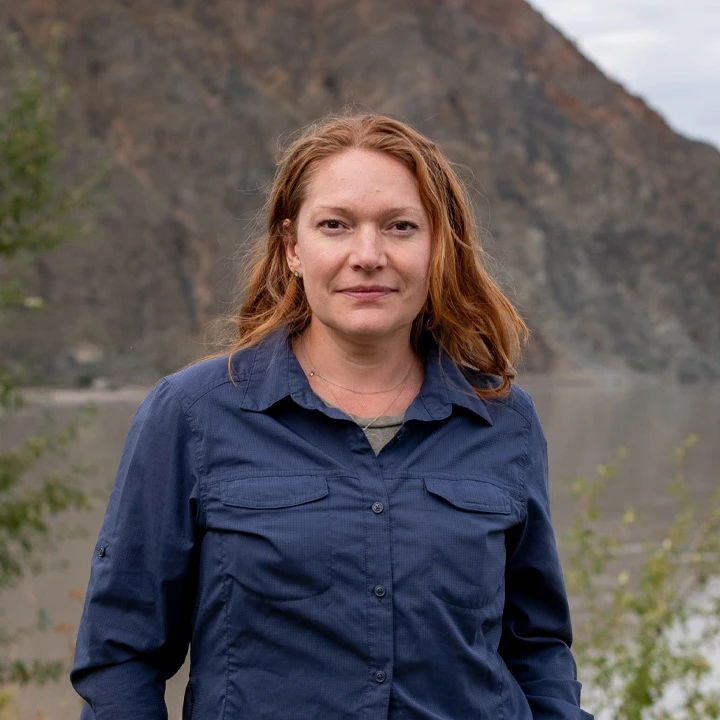
In this one, Cody talks to author and historian Bathsheba Demuth. She grew up in Iowa, a place she describes as having an extremely cultivated landscape — shaped and managed by people at nearly every turn. Her first exposure to the North came through the writings of Jack London, books her parents read to her aloud. As a kid, London’s tales of adventure resonated with her, but as she got older she began thinking about his reflections on how economic and political systems can crush people. At 18, she made the decision to head to the Arctic. There she spent time mushing dogs in the Yukon. She says that experience was utterly transformative. It shifted her idea of what it means to be a human being — not as a lone agent of individual destiny, but as a life that is part of a broader ecology.
In her book _“Floating Coast: An Environmental History of the Bering Strait,”_ she compares how Soviet Russia and the United States approached the Arctic, specifically around the Bering Strait. What she discovered was that despite their ideological differences, both nations treated animals and sealife in similar ways — primarily as resources to be managed or harvested. For those living outside the Arctic, the region has undergone a series of shifting narratives, it’s gone from a place of extraction, to a geopolitical flashpoint during the Cold War, and now, to the forefront of global climate change. Both of those perspectives stand in stark contrast to how many Indigenous Arctic communities have historically related to the sea and the land, their focus being on reciprocity rather than domination.
EP 079In this episode, Cody has a conversation with his mom, Sharon Liska. For the past 13 years, she has worked as a nurse at a neonatal intensive care uni...
 EP 039
Photographer Young Kim says that it’s weird to live in a place that’s so big and so busy that people aren’t checking up on each other. He prefers smal...
 EP 069
Lath Carlson is the Executive Director of the Museum of the Future in Dubai. The Museum of the Future is dedicated to telling stories about how humans...