 EP 039
interviewsAudio
2019 Throwback: EP 039 The Alaska Beer Frontier with Dr. Fermento
In this episode, Cody has a conversation with longtime Alaska beer columnist Jim Roberts, better known as Dr. Fermento. Jim's been writing about and i...
Adjust the website's display to match your visual and cognitive needs. Your preferences are saved automatically on this device.
Enhance color intensity to improve readability.
Increase the global font size by 10%.
Override custom typography with a standard system font.
Add prominent underlines to all clickable hyperlinks.
Disable movement, scrolling effects, and transitions.
Apply OpenDyslexic weighted typeface for easier reading.
In this one, I talk to journalist Paul Koberstein, whose recent book, “Canopy of Titans,” explores one of the most overlooked ecosystems on Earth: the...
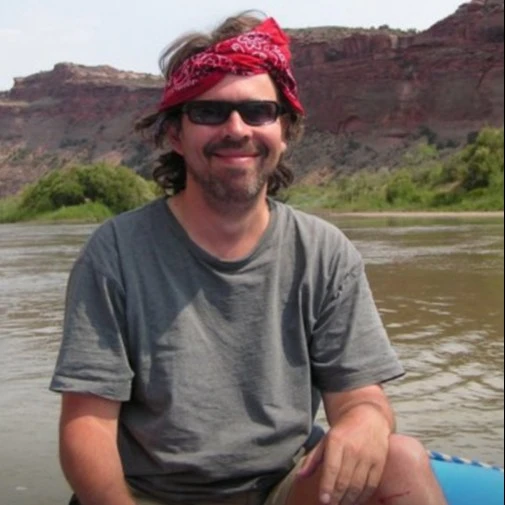
In this one, I talk to journalist Paul Koberstein, whose recent book, “Canopy of Titans,” explores one of the most overlooked ecosystems on Earth: the Pacific Coastal Temperate Rainforest. Stretching roughly 2,500 miles from just north of San Francisco’s Golden Gate Bridge to the western Gulf of Alaska, it’s the largest temperate rainforest on the planet. Fueled by Pacific storms and cool ocean currents, it supports towering redwoods, Sitka spruce, western hemlock, and cedar — some of the largest and oldest trees in existence. Acre for acre, these forests store more carbon than tropical rainforests like the Amazon, with vast reserves locked in massive trunks, deep soils, roots, and centuries of accumulated woody debris. But even though it’s one of the most carbon-dense ecosystems we have, and a critical buffer against climate change, it remains largely overlooked in global climate conversations.
Paul pushes back on some of the most common narratives about forests and climate. He points to those industry ads that promise for every tree cut down, three more will be planted. It’s an argument that sounds reassuring until you realize a young sapling can take a century to store the amount of carbon held in the massive tree that was felled. Trees are about 50 percent carbon. Through photosynthesis they pull carbon dioxide out of the air, lock that carbon into their trunks and roots, and release the oxygen we breathe. Southeast Alaska’s Tongass National Forest alone holds more total carbon than any national forest in the country. That scale of storage is central to Paul’s point: the science doesn’t say we’re powerless. It suggests that we can still influence the climate back toward something more stable. If fossil fuels loaded the atmosphere with excess carbon, then forests, if protected and restored, can help draw it back down. Forests have stabilized the climate for thousands and thousands of years. Whether they continue to do so depends largely on us letting them do their job.
EP 039In this episode, Cody has a conversation with longtime Alaska beer columnist Jim Roberts, better known as Dr. Fermento. Jim's been writing about and i...
EP 086In this conversation, Cody talks with King of the Hill competitors Julie Zell and Steve Klassen. King of the Hill was a legendary snowboard competitio...
 EP 050